Case study
K-9 Handler Academy™: an AI coaching app, from idea to launch
K-9 Handler Academy is a dog-training app for people who want to become real handlers, not just owners. We designed and built it end to end: AI coaches you can talk to while you train, AI analysis of every session, a structured curriculum, and subscriptions. It’s available for iOS and Android.
The idea
Most dog-training apps are video libraries. Real progress comes from feedback — someone watching your timing and telling you what to fix next. K-9 Handler Academy puts that feedback in your pocket. It’s built on Dr. Nikelshpur’s handler-first methodology: train the person’s timing, mechanics and consistency, and the dog follows.
Because this is our own product, we were the client and the builder at once. That meant making every call a client would make — what to build first, what to charge, what to leave out — and living with the results.
I train with the app myself. My golden retriever, Bailey, learned the directed jump, a skill that usually takes weeks to teach, in about an hour of total training spread over four or five short sessions. I built the thing, so I’m biased, but that one still surprised me.
— Dr. Dmitry Nikelshpur
What we built
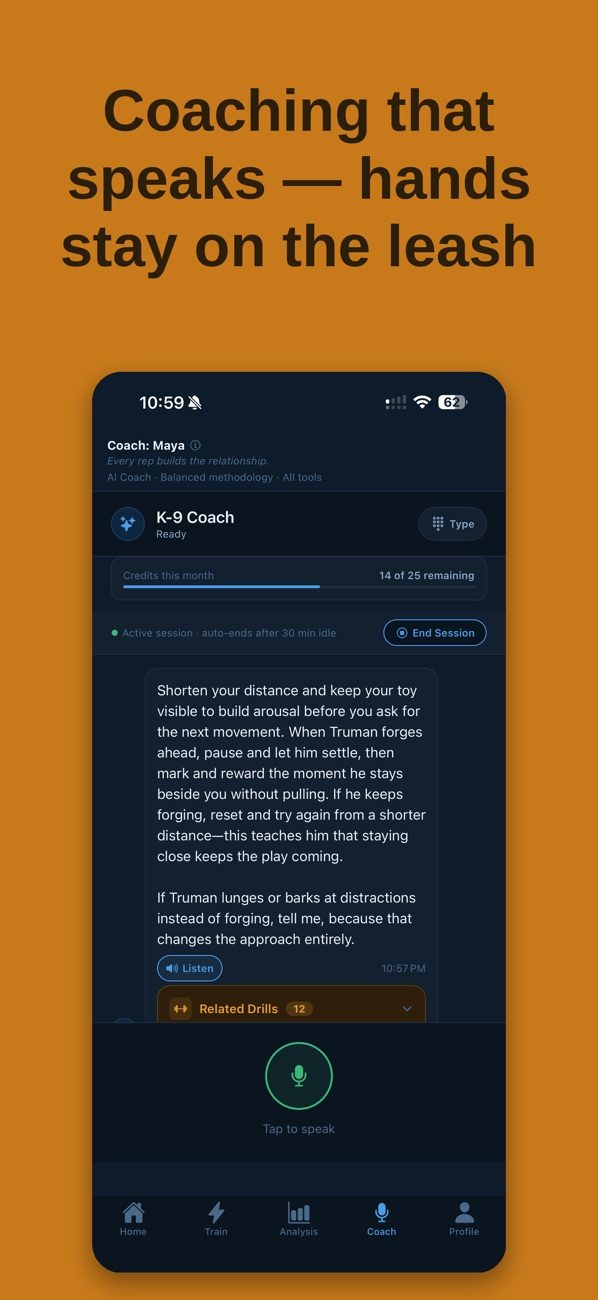
- AI coaches you talk to. Describe what’s happening and get specific, immediate guidance. Speak and the coach answers out loud, so your hands stay on the leash. Two coaches with distinct styles: Maya is direct and practical; Gus explains the why before the fix.
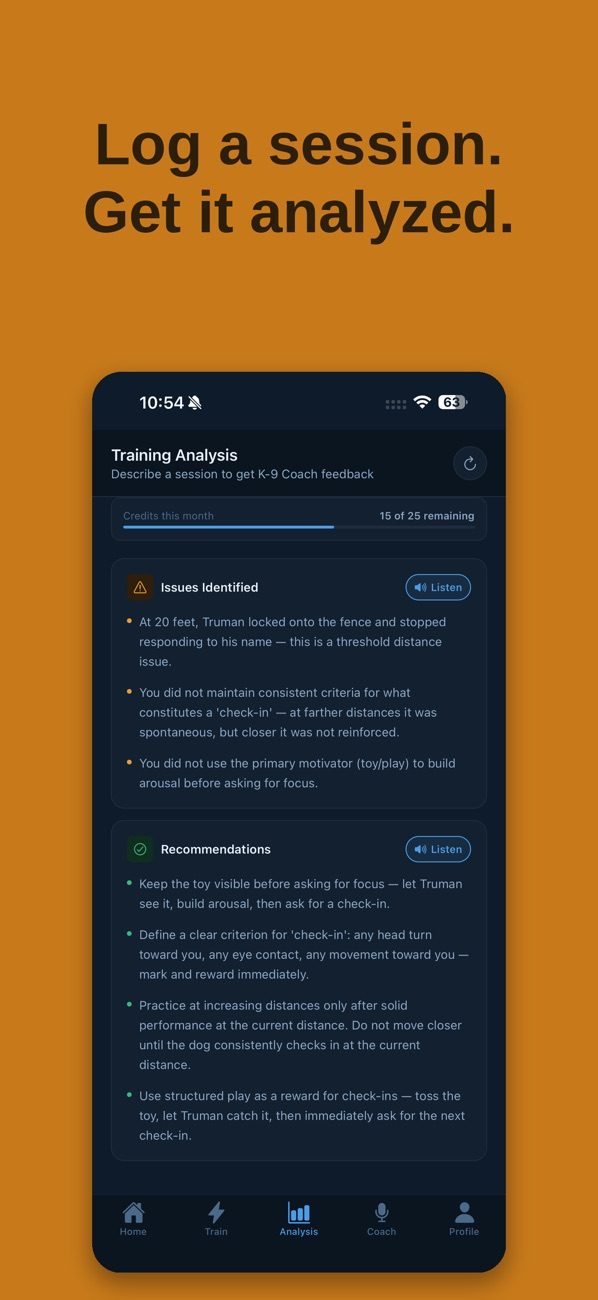
- Session analysis. Log a training session and get an AI breakdown of what worked, what didn’t, and exactly what to drill next.
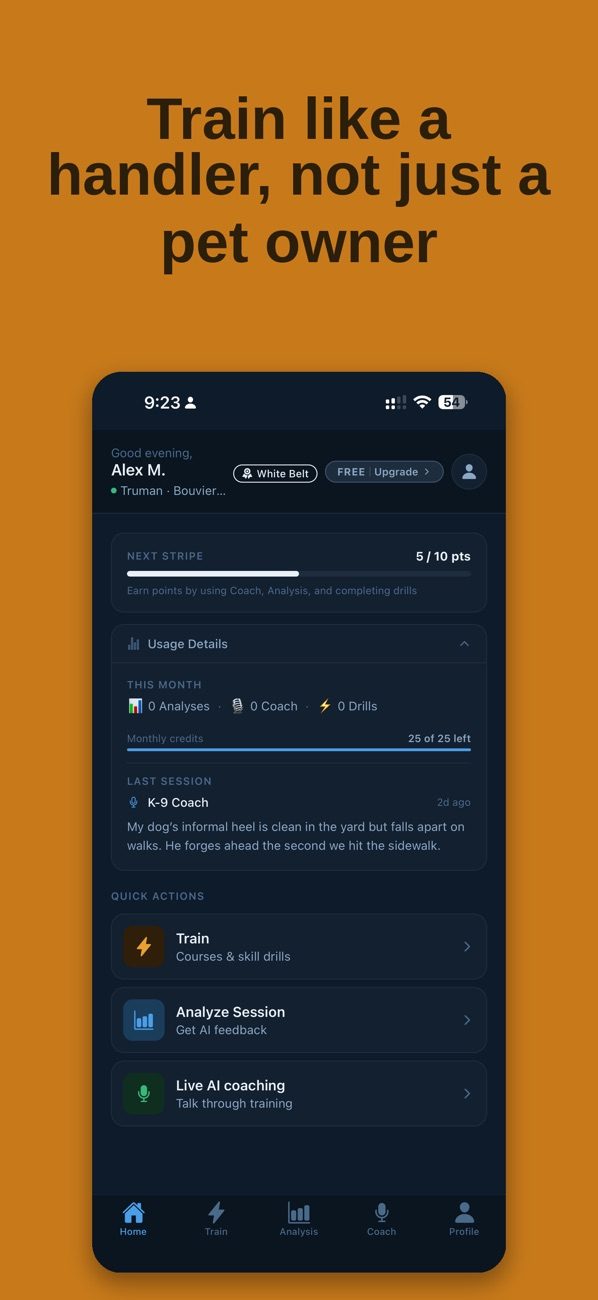
- A real curriculum. Belt progression from White to Red, with clear advancement criteria, step-by-step skill drills and courses.
- Multiple dogs per account. Each dog has its own profile and training record, so the AI’s advice for one dog never leaks into another’s.
- Subscriptions. Free, Pro and Elite tiers with monthly AI credits and top-ups, sold right in the app.
The hard parts
A demo of an AI assistant takes an afternoon. A product people pay for takes solving the problems below. They’re the same problems most businesses hit when they put AI in front of customers.
An AI coach that remembers — correctly
The coach recalls each handler’s past sessions and problems, so advice builds over time. We learned that memory has to be curated: if the system saves a weak or off-topic answer, it later retrieves it as fact. We added clear rules for what gets remembered, and checks to keep bad answers out.
Predictable AI usage
Every AI conversation and analysis has a real cost. A credit system ties usage to each subscription tier, with monthly allowances, visible remaining credits and optional top-ups — so heavy users pay for what they use and the business stays predictable.
Hands-free coaching
Handlers are holding a leash, not a phone. Voice in, voice out made the coach usable in the middle of a session — and forced tight, practical answers instead of long essays.
From prototype to launch
Subscriptions, entitlements, app review, privacy and terms, and a cloud backend that scales with usage. The unglamorous work that turns a working prototype into a real product.
When the coach believed its own mistakes
We gave the coach a memory so it could pick up where each handler left off: the dog, last week’s problem, what was already tried. Early on we noticed something odd. Now and then the coach gave a weak answer, off-topic or too generic, and that answer got saved like everything else. A few sessions later the memory system pulled it back up as something it “knew” about the handler, and the coach repeated it with full confidence.
The fix wasn’t a cleverer prompt. It was deciding what the AI is allowed to remember. Answers that actually address the handler’s training get saved; redirects and off-topic replies never do; and bad entries that slipped in earlier get cleaned out. Any business that gives an AI assistant a memory of its customers needs rules like these, or the assistant slowly teaches itself the wrong things.
How it’s built
A cross-platform mobile app on a serverless cloud backend: small, independent functions for coaching, analysis, usage and accounts, a managed database, and event-driven jobs for things like subscription updates. It runs on a large language model, with prompts and guardrails tuned for coaching. It costs little to run when it’s quiet and scales with demand.
It’s also built to change. The AI model behind the coaches, their personalities and instructions, the curriculum and the subscription plans can each be adjusted or swapped without rebuilding the app. When something better comes along, or users ask for something new, the product moves with it.
And it’s built to grow. New features plug into the same foundation instead of starting over: the second coach, Gus, was added this way, and new courses and drills go in the same way.
What this means for your business
Swap “dog handler” for “patient,” “client” or “customer,” and the building blocks are the same:
- an AI assistant that knows your material and stays on topic;
- memory of each customer’s history, handled carefully;
- usage limits and plans that keep AI costs predictable;
- voice where people’s hands or eyes are busy — in a clinic, on a job site, on a support call.
We’ve already worked through the hard parts on our own product. You get that experience on yours.
Have an idea like this?
Tell us what you want to build. A free consultation is usually enough to find out what’s realistic, what it would take, and where to start.